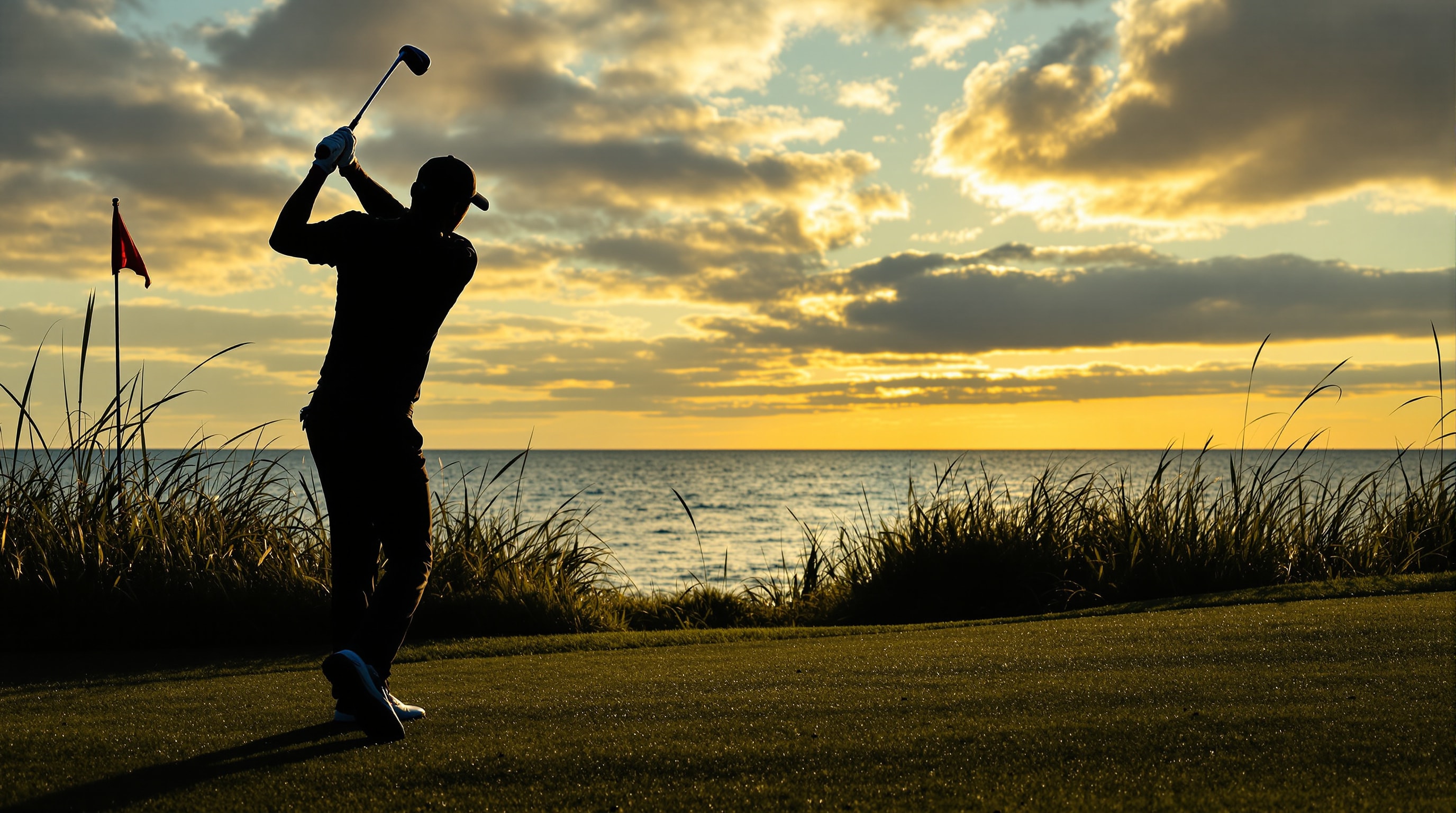
A course on a Great Lake asks questions your home track may not. The wind is a near-constant partner, water frames more shots than you are used to, and the ground moves under your feet. None of it is unfair — but a little strategy goes a long way toward a score you are happy with. These tips are written with the lakeside course at Sawmill Creek in mind, and they apply up and down the North Coast.
Respect the wind — then use it
Lake Erie generates a steady afternoon breeze that funnels across exposed holes, especially on the open back nine. The single biggest scoring skill up here is flighting the ball down: play the ball a touch back, take more club, swing easier, and keep your hands ahead through impact to reduce spin and hold your line. A smooth six-iron under the wind beats a hard eight ball-oon every time. Downwind, the opposite applies — the wind flattens your spin, so favor an extra club of run-out and land the ball short of your target.
Account for cold, heavy air
Wind gets all the attention up here, but air density does quiet damage too. A cool, damp morning off the lake — the kind April and October specialise in — costs real carry, and most players give away shots by trusting their July yardages into it. Two working rules: expect to lose a few yards for every ten degrees below a warm-day baseline, and expect a dew-soaked fairway to give you none of the run you are used to. Take the extra club, land it shorter, and let the ground finish the job. The same morning that shortens your driver also softens the greens, so a slightly bolder approach line is usually on offer.
Play the percentages around water
Fazio uses water for drama, but the smart play is almost always the dry one. When a hazard tightens an approach, aim at the fat of the green rather than the flag, and treat a pin cut near the water as a bonus you only chase with a stock number and a clean lie. Most double bogeys on lakeside courses come from trying to carry a corner or nip a tucked pin with the wrong club. If you are between clubs over water, take the more club and swing within yourself.
Manage the two nines differently
The wooded front (the Creek Nine) rewards position and patience — keep the ball below the tree line, favor fairway finders off the tee, and accept that some holes are three-shot pars. The open back (the Lake Nine) is where wind and water dominate; that is the time to commit to the low flight and the conservative line. Understanding how the architect frames each hole — what the bunkers are pointing at, where the elevated tee is steering you — tells you the safe side before you swing.
Handle rolling lies
Glacial terrain means uneven stances. The quick fixes: with the ball above your feet, the shot tends left, so aim right and choke down; with the ball below your feet, it tends right, so aim left and stay in your posture through the strike. On uphill and downhill lies, match your shoulders to the slope and adjust club up or down. Solid contact from an awkward lie beats a perfect swing you bail out of.
Putt to the lake, chip with margin
On many shoreline courses, subtle green break tends to run toward the water — read your putts with that in mind when you are unsure. Around the greens, Fazio’s run-offs and elevation reward the low-risk chip or putt-from-the-fringe over the flashy flop. Give yourself a makeable next putt rather than a highlight reel.
Keep it in perspective
Finally, a lakeside round is meant to be enjoyed. Track your real tendencies over a season rather than one windy afternoon — the USGA handicap system is the honest mirror — and if you want to build repeatable technique for these conditions, our instruction page covers practicing with a purpose, while the PGA’s tips library is a deep well of fundamentals.
For Ohio players who want to maintain an official index through the season, the Ohio Golf Association makes it straightforward to join or renew a GHIN profile online and hold a World Handicap System Handicap. Across the state, 365 golf clubs make up the affiliated clubs of the Ohio Golf Association, which has promoted the betterment of golf and amateur championships in Ohio for the past 100 years. A handicap kept up through the season gives you a reliable baseline for how your game travels when the breeze comes up off Lake Erie.